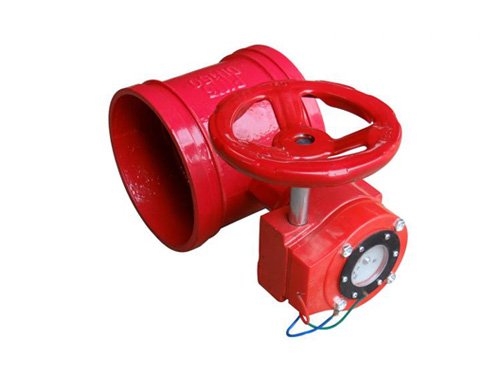
XD381X Turbine Grooved Signal Butterfly Valve
XD381X Turbine Grooved Signal Butterfly Valve is a dedicated control valve widely adopted in fire protection pipeline systems. Combining grooved connection, worm turbine transmission and built-in signal feedback function, this valve can cut...
XD381X Turbine Grooved Signal Butterfly Valve is a dedicated control valve widely adopted in fire protection pipeline systems. Combining grooved connection, worm turbine transmission and built-in signal feedback function, this valve can cut off pipeline medium and transmit real-time valve position signals to the fire control cabinet simultaneously. It is extensively applied in automatic sprinkler systems, fire hydrant pipelines, commercial buildings, underground pipe galleries and various fire service engineering projects.
The valve body is cast from high-strength ductile iron with good toughness and pressure resistance. The integrated EPDM lining is installed inside the valve cavity. When the butterfly disc closes, it closely fits the rubber lining to achieve bidirectional tight sealing and zero leakage. The EPDM material boasts outstanding ageing resistance and water corrosion resistance, fully meeting the long-term operation requirements of fire water pipelines. Different from flanged valves, the grooved end structure allows fast assembly with pipe couplings. No welding or complicated bolt alignment is required during installation, which greatly accelerates construction progress and facilitates disassembly for later maintenance and pipeline reconstruction.
Equipped with turbine worm drive device, the valve features labor-saving operation and self-locking performance. After the operator adjusts the valve to the target position, the turbine mechanism can lock the angle automatically, preventing the butterfly plate from shifting due to water flow impact or pipeline vibration. Operators can easily complete opening and closing actions by rotating the handwheel. Even medium and large diameter valves can be operated smoothly without excessive manpower.
The most prominent characteristic is the built-in signal feedback device. When the valve reaches fully open or fully closed status, the internal limit switch will be triggered instantly to output electric signals to the fire alarm control system. Managers in the control room can remotely check whether the fire pipeline is normally unobstructed without field patrol. If the valve is accidentally closed, the system will send out prompt information timely, effectively eliminating potential fire hazards caused by blocked pipelines. The signal switch supports normally open and normally closed contacts to match different fire control circuit designs.
The valve stem adopts stainless steel material with multi-layer sealing packing, which effectively prevents medium leakage along the stem. Anti-blowout stem structure enhances safety under sudden pipeline pressure fluctuation. The standard nominal pressure is PN16, and the available diameter ranges from DN50 to DN300. The valve supports horizontal and vertical installation and has no strict requirement on fluid flow direction.
It should be noted that this signal butterfly valve is mainly used for pipeline shut-off. Continuous throttling application is not recommended. If kept partially open for a long time, high-speed fluid will continuously scour the rubber lining, accelerating abrasion and shortening service life. All finished valves pass strict shell hydrostatic test and sealing test before delivery. Every set of signal assembly undergoes repeated switching tests to ensure sensitive and accurate signal transmission.
With quick grooved installation, stable turbine transmission, reliable elastic sealing and real-time signal feedback, XD381X Turbine Grooved Signal Butterfly Valve complies with global fire engineering acceptance standards. It is recognized by fire engineering contractors and pipeline system integrators. Our factory can provide customized solutions including special lining materials and optimized signal components to satisfy diversified procurement demands from worldwide customers.